
Best Creatine Gummies 2026: Tested, Reviewed & Compared
Science-backed insights, practical wellness guidance, and smarter ways to support your daily routine.

Best Creatine Gummies 2026: Tested, Reviewed & Compared
Looking for the best creatine gummies in 2026? Compare creatine form, full-serving dose, gummies per serving, testing transparency, ingredients, price per serving, and daily convenience before choosing a product.
If you are comparing best creatine gummies 2026 reviews or searching for top-rated creatine gummies in 2026, do not judge a product by flavor or packaging alone. Start with the label and ask:
How much creatine monohydrate do I actually get from the manufacturer's full recommended serving?
This guide also explains where Shark Mode Creatine Gummies by Great Bite Supplements fit into the category.
Disclosure: Great Bite Supplements makes Shark Mode Creatine Gummies. We include Shark Mode in this comparison because it is our product, and we clearly identify that relationship rather than presenting this as an independent ranking. Competitor information should always be confirmed on the current product label or manufacturer website before purchasing.
Browse Great Bite Creatine Gummies
Quick Comparison: Creatine Gummies to Consider in 2026
| Product | Best For | Creatine Form | Full-Serving Dose | Key Consideration |
|---|---|---|---|---|
| Shark Mode Creatine Gummies | Full-dose convenience and daily consistency | Creatine monohydrate | 5 g | 4 gummies per full serving |
| CREATE Creatine Gummies | Sport-focused certification | Creatine monohydrate | Check current label | Verify current certification |
| Force Factor Creatine Gummies | Mainstream retail availability | Creatine monohydrate | Check current label | Compare full serving |
| Bloom Creatine Gummies | Lifestyle-focused gummy format | Creatine monohydrate | Check current label | Compare dose and price |
| Beast Bites Creatine Gummies | Flavor-focused shoppers | Creatine monohydrate | Check current label | Compare sugar and serving size |
| Tribe Nutrition Creatine Gummies | Straightforward formula | Creatine monohydrate | Check current label | Compare testing and formulation |
There is no universal winner for every shopper. The better question is which creatine gummy gives you the dose, convenience, testing standards, serving count, and price that fit your routine.
1. Shark Mode Creatine Gummies by Great Bite Supplements
Best for: Full-dose creatine without powder or mixing
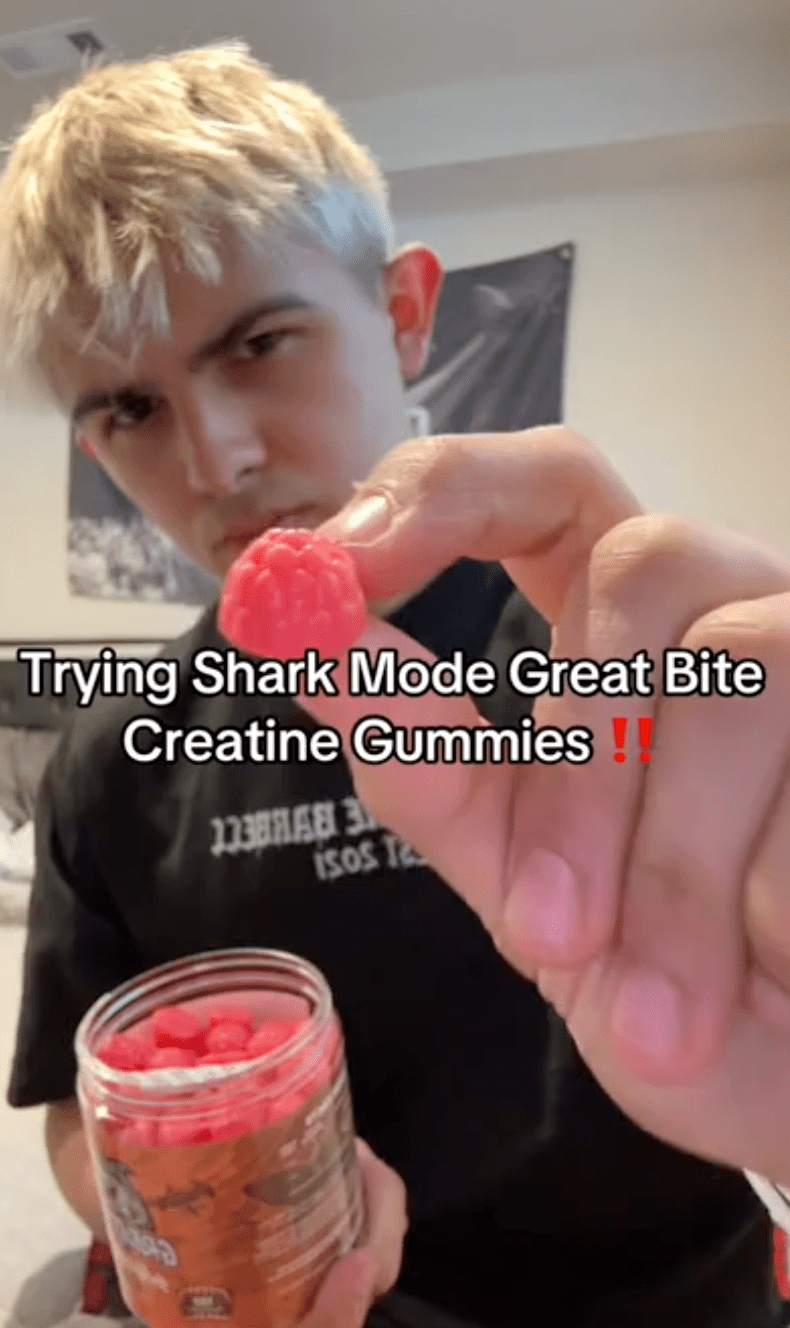
Shark Mode Creatine Gummies are Great Bite Supplements' creatine monohydrate gummies for people who want a simpler way to take creatine every day.
One full serving is 4 gummies and provides 5 grams of micronized creatine monohydrate. Each bottle contains 30 full servings, making one bottle a 30-day supply when taken as directed.
Shark Mode at a Glance
-
5 g micronized creatine monohydrate per full serving
-
4 gummies per serving
-
30 full servings per bottle
-
120 gummies per bottle
-
No scoop, shaker, or mixing required
-
Designed for daily use on training and rest days
-
Third-party testing information is provided by Great Bite
-
Listed at $34.99 at the time this guide was updated
Why Shark Mode Stands Out
The biggest advantage is straightforward dosing. A full serving delivers 5 grams of creatine monohydrate while keeping the routine portable and simple.
Powder remains one of the least expensive ways to take creatine, but gummies can make sense for people who repeatedly skip powder because they do not want to mix a drink every day.
Our take: Shark Mode is built for the customer who values consistency and convenience enough to choose gummies over bulk powder.
Shop Shark Mode Creatine Gummies
See the full Creatine Gummies collection
2. CREATE Creatine Gummies
Best for: Athletes who prioritize sport-focused third-party certification
CREATE has become one of the more recognizable names in the creatine gummy category. Its positioning centers heavily on creatine gummies rather than a broad supplement catalog.
What to Compare Before Buying
-
Current creatine dose per serving
-
Number of gummies required per serving
-
Current certification status
-
Total servings per package
-
Price per 5-gram equivalent serving
-
Added sugar and sweeteners
Who it may fit: Competitive athletes and shoppers who put third-party sport certification near the top of their buying criteria.
3. Force Factor Creatine Gummies
Best for: Familiar supplement-brand distribution
Force Factor is an established supplement company with broad retail distribution. That makes its creatine gummies relatively easy to compare against other mainstream options.
What to Compare
-
Creatine monohydrate amount per full serving
-
Gummies required to reach the labeled dose
-
Testing or certification displayed on the current package
-
Added ingredients
-
Price per full serving
Who it may fit: Shoppers who prefer buying from a larger supplement company with a long retail footprint.
4. Bloom Creatine Gummies
Best for: Shoppers who prioritize a lifestyle-oriented gummy experience
Bloom has a large consumer wellness presence and brings that branding into the creatine category.
The important comparison is not simply whether the product contains creatine. Look at the full serving dose, number of servings per container, number of gummies required, and cost per meaningful daily dose.
5. Beast Bites Creatine Gummies
Best for: Flavor-focused shoppers
Beast Bites has received attention in creatine gummy roundups for its gummy-first positioning and flavor options.
Taste can matter, but flavor should not replace the fundamentals.
Check the Label For
-
Creatine monohydrate per serving
-
Added sugar
-
Number of gummies per serving
-
Servings per bottle
-
Current third-party testing information
6. Tribe Nutrition Creatine Gummies
Best for: Shoppers looking for a relatively straightforward formula
Tribe Nutrition has appeared in creatine gummy comparisons focused on ingredient simplicity.
As with every gummy, confirm the current Supplement Facts panel rather than relying on an older review because formulations, serving sizes, and packaging can change.
How We Evaluate the Best Creatine Gummies in 2026
A product should not be called one of the best creatine gummies of 2026 because it has the loudest packaging or sweetest flavor.
1. Creatine Form
Creatine monohydrate is the benchmark form with the strongest research history.
2. Creatine Per Full Serving
Look at the entire serving, not just the number printed prominently on the front of the bottle.
Shark Mode provides 5 grams of creatine monohydrate per 4-gummy serving.
3. Number of Gummies Per Serving
Compare gummies per serving, total gummies per bottle, full servings per bottle, and cost per full serving.
4. Third-Party Testing
Look for information about identity, potency, purity, contaminants, and banned-substance testing when relevant to competitive sport.
5. Sugar and Sweeteners
Inspect added sugar, sugar alcohols, sweeteners, serving size, and total calories.
6. Price Per Full Serving
Bottle price can be misleading.
Bottle price ÷ number of full servings = cost per daily serving
Creatine Gummies vs. Powder: Which Is Better?
Creatine powder still has a major advantage: cost efficiency.
If your only goal is getting creatine monohydrate for the lowest possible price, powder usually makes more economic sense.
Creatine gummies compete on a different dimension: convenience.
They may be worth the premium for someone who:
-
Dislikes gritty drinks
-
Frequently forgets to mix powder
-
Travels often
-
Wants a portable serving
-
Prefers chewable supplements
-
Values a routine with fewer steps
Powder = lower cost
Gummies = lower routine friction
Neither format automatically makes the creatine itself more effective. The important variable is whether you consume an appropriate amount consistently.
If convenience is the priority, browse the Great Bite Creatine Gummies collection.
How to Take Creatine Gummies
Follow the serving instructions on the specific product you purchase.
For Shark Mode, one full serving is 4 gummies providing 5 grams of creatine monohydrate.
Creatine is generally used consistently rather than only on workout days. Exact timing is usually less important than maintaining regular intake.
A loading phase is optional.
Frequently Asked Questions About Creatine Gummies
What are the best creatine gummies in 2026?
There is no single best option for every person. Compare creatine form, full-serving dose, gummies per serving, testing transparency, ingredient panel, servings per bottle, and cost per full serving. Shark Mode is designed for shoppers who want 5 grams of creatine monohydrate in a 4-gummy serving without powder or mixing.
What should I look for in creatine gummies reviews in 2026?
Focus on objective details instead of star ratings alone. Check the actual creatine dose, how many gummies make a full serving, testing information, ingredient transparency, taste and texture feedback, and the cost per meaningful serving.
Are creatine gummies as effective as powder?
The key issue is whether the product delivers an appropriate amount of actual creatine and whether you take it consistently.
Creatine monohydrate remains creatine monohydrate regardless of whether it is delivered in powder or a properly formulated gummy. Gummies mainly change convenience, taste, serving format, and cost.
How much creatine is in Shark Mode Creatine Gummies?
A full serving of 4 Shark Mode gummies provides 5 grams of micronized creatine monohydrate.
How many servings are in Shark Mode?
Each bottle contains 30 full servings, or 120 gummies total.
Do I need to take creatine on rest days?
Creatine is typically taken consistently, including on non-training days.
Do I need a loading phase?
No. Loading is optional.
Are creatine gummies better than powder?
Not universally.
Choose powder if your priority is lowest cost per gram.
Choose gummies if your priority is convenience, portability, taste, and reducing friction in your daily routine.
Which Creatine Gummies Should You Choose?
Choose Shark Mode if you want 5 g of creatine monohydrate in a 4-gummy serving, 30 full servings per bottle, and a no-mixing daily routine.
Consider CREATE if sport-focused third-party certification is your primary buying criterion.
Consider Force Factor if widespread retail availability and a familiar supplement company matter most.
Compare Bloom, Beast Bites, and Tribe Nutrition if flavor, branding, or ingredient preferences are major factors for you.
The Great Bite Difference
Great Bite built Shark Mode around one simple problem: creatine works best as a consistent routine, but many people get tired of scooping and mixing powder every day.
Shark Mode turns that routine into four gummies delivering a full 5-gram serving of creatine monohydrate.
No shaker. No scoop. No mixing.
Shop Shark Mode Creatine Gummies
Product formulations, prices, certifications, serving sizes, and availability can change. Always review the current product label and manufacturer information before purchasing.
These statements have not been evaluated by the Food and Drug Administration. This product is not intended to diagnose, treat, cure, or prevent any disease.
Ready to build your stack?
Explore Great Bite gummies made for focus, performance, recovery, and everyday wellness.